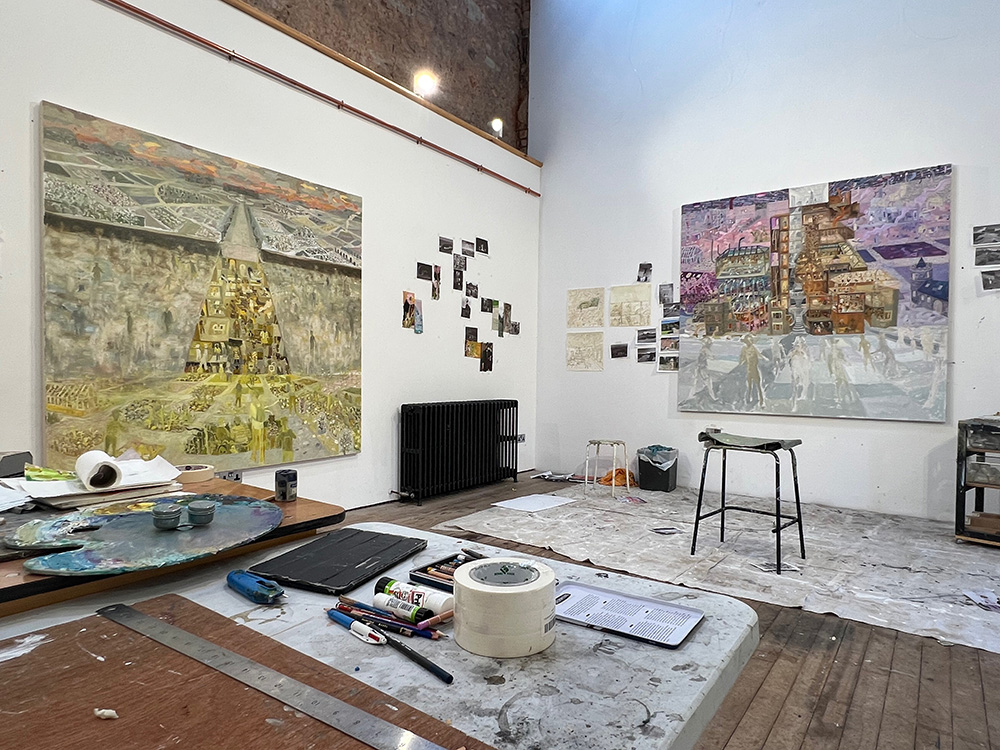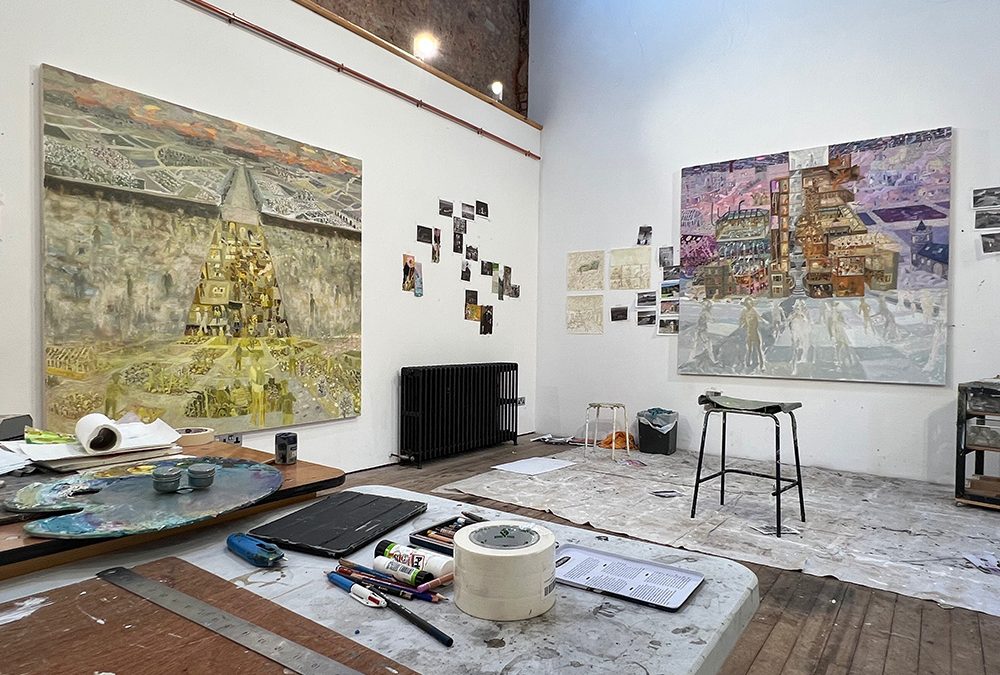
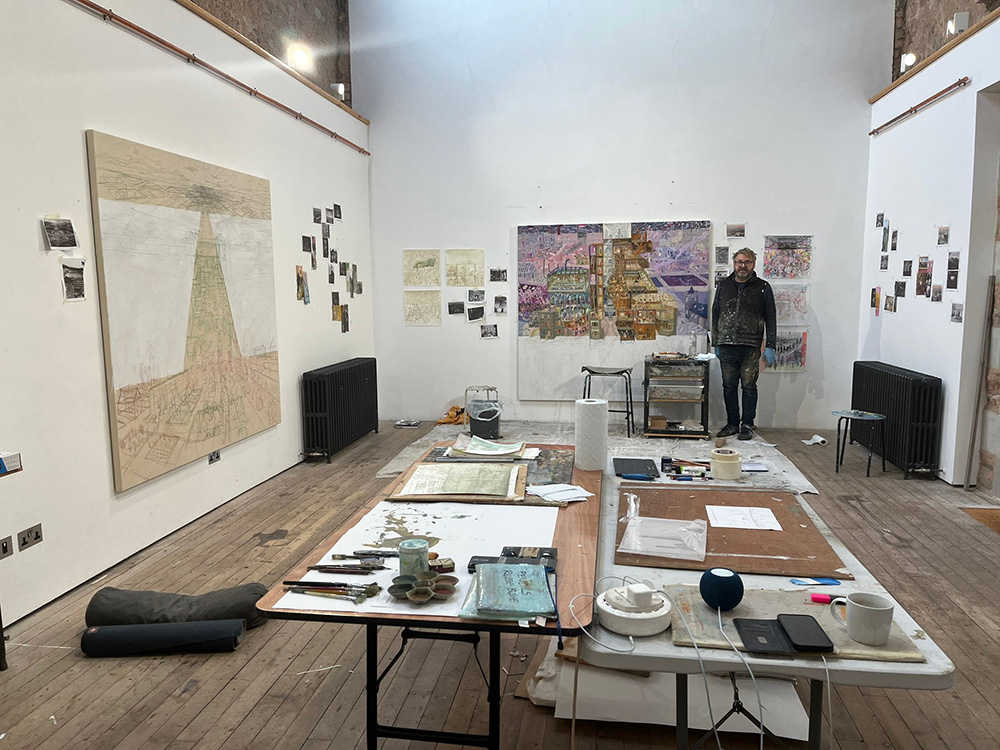
I’ve just returned from a wonderful four-week residency at the Hugo Burge Foundation on the Marchmont Estate in the Scottish Borders, where I was fortunate enough to be awarded the Skyboat Visual Arts Residency. My studio for the month was a converted squash court, which might sound an unlikely place to make paintings, but turned out to be just about perfect.
Marchmont is an extraordinary place, with a fascinating history. At its heart stands Marchmont House, a magnificent Palladian mansion built in the 1750s for Hugh Hume-Campbell, the 3rd Earl of Marchmont. The house was substantially remodelled in the early twentieth century by the Scottish architect Sir Robert Lorimer, whose additions include a remarkable oak-panelled music room. More recently, the house underwent an extensive restoration, winning the Historic Houses Restoration Award in 2018.
But what makes Marchmont particularly interesting today is the vision of the late Hugo Burge (1972–2023), an entrepreneur, philanthropist and passionate supporter of the arts. Having made his career in the travel and technology industries, Hugo devoted much of the last decade of his life to transforming the estate into a place where artists, designers and craftspeople could work, collaborate and develop their ideas.
He restored buildings, established studios and workshops, supported traditional crafts and created opportunities for artists to spend sustained periods developing their work. In 2022 he established the Marchmont Makers Foundation, subsequently renamed the Hugo Burge Foundation following his untimely death in 2023. His ambition was not simply to preserve a beautiful historic estate, but to give it a new creative purpose.
The Foundation now supports artists and makers working across a remarkable range of disciplines, from painting and sculpture to silversmithing, printmaking, ceramics and furniture making. The Skyboat Residency takes its name from a wonderful living sculpture by Charlie Poulsen on the estate — an upturned boat supported by an oak framework, with trees growing beneath it. It seems an appropriately imaginative symbol for a place dedicated to nurturing creativity.
For me, the great luxury was space and uninterrupted time. The former squash court, with its high ceiling and generous floor area, was large enough to accommodate several substantial canvases at once. After years of trying to manoeuvre increasingly ambitious paintings around the limitations of my home studio, it was something of a revelation.
I arrived with plans for two large paintings and spent the four weeks getting both well underway. They are ambitious, complicated architectural compositions, the sort of paintings that benefit enormously from being able to stand back, look properly and leave everything set up overnight without having to move the furniture.
Of course, having more time and space doesn’t necessarily make painting any easier. It simply gives you more opportunities to change your mind, paint things out and complicate matters further. Nevertheless, by the end of the residency I had made substantial progress on both canvases and returned to Edinburgh with plenty of momentum.
There was also something rather special about working in a place where creativity is so clearly valued, surrounded by makers and craftspeople pursuing their own projects, and within an estate whose history stretches back several centuries.
Hugo Burge’s vision was to create a lasting home for creative endeavour, and it is wonderful to see that ambition continuing through the work of the Foundation. I’m enormously grateful to everyone there for their generosity, encouragement and hospitality. Four weeks in a squash court turned out to be one of the most productive and enjoyable periods of painting I’ve had in years.
Further reading
The history of Marchmont House
The Skyboat sculpture and its story
Residencies at the Hugo Burge Foundation
Hugo Burge Foundation 1